Tree Removal Kamloops
If you're looking for tree removal in Kamloops, Blue River, Salmon Arm, Clearwater, Clinton, and Twin Rivers, you're in the right place. Kamloops Arborists stands out because of our highly trained certified arborists. Whether you need a simple removal or a hazardous tree removal, we use specialized equipment to do the job safely and protect your yard. The process of removing trees, especially big trees or dangerous trees is a hazardous and difficult procedure that requires careful and advanced planning and consideration. There are several factors to take into consideration before removing a tree, including its location, size, and type of tree. It's extremely easy for tree removal to result in significant property damage or even injury if the proper measures aren't taken. If your goal is to have the trees on your yard cut down by certified experts, contact us today.
Trees can either be removed for a particular reason or merely for aesthetic purposes. Safety concerns,
land clearing, damage to property, or a desire for more sunlight and space might all be reasons. Before hiring a tree service company to remove a tree, it is important to ask the right questions. What type of equipment do they have? Is the crew experienced in removing trees? Do they take proper precautions for the tree removal process? The best tree service companies in Kamloops will be able to answer these questions and much more. When you are looking for a tree service company, ask for references and call them up to see how their experience with their certified arborist went. We are happy to provide any references that you require so that we can show you that we really are the best tree service in Kamloops.
Get Instant Quote
Contact Us
Importance of Timely Tree Removal
Tree cutting is a complex task that requires the expertise of professionals. Hiring an experienced tree care arborist who can assess the tree's condition and determine the best action is a very important part of over all tree care and tree maintenance. Several reasons a tree might need removal include disease, damage, overgrowth, and proximity to structures. When trees grow too close to a house, they can cause damage to the roof or walls and even lead to foundation problems. Trees that are too close to power lines can also be a significant hazard, as they can cause power outages or even electrical fires. Trees that are infected with diseases or infested with insects can weaken and become hazardous to people and property. Similarly, trees damaged by storms or other natural disasters can pose a significant risk and must be removed immediately.
Our Expert Tree Removal Process
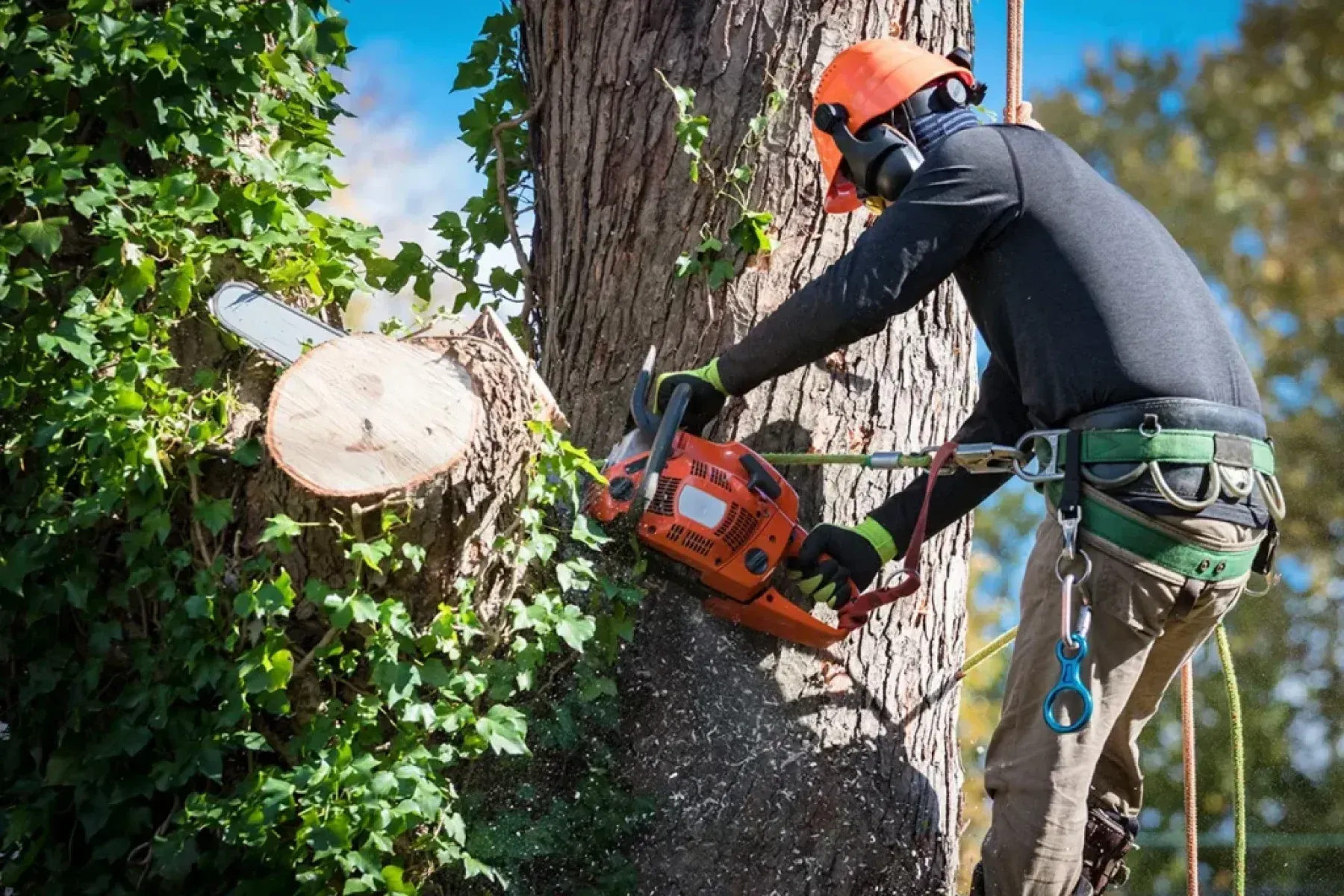
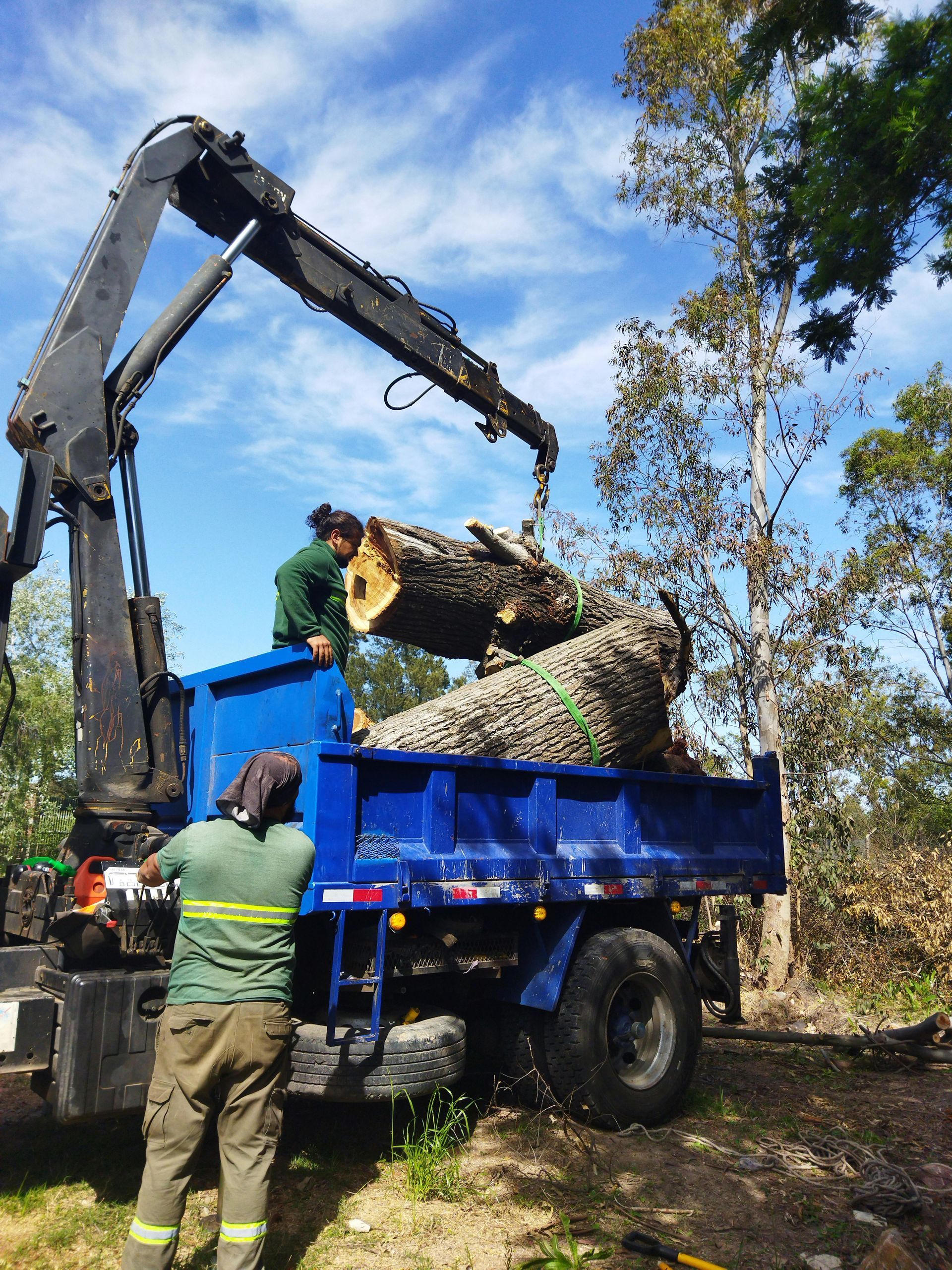
Our process typically involves cutting the tree down in sections with chainsaws, starting at the top and working down. This is done to prevent damage to surrounding property and ensure the safety of our crew and others in close proximity. Once the tree removal is complete, we offer stump removal or grinding then take away any remaining debris, leaving the site clean and free of hazards. We're able to grind down every tree we cut with our wood chipper and can even turn them into mulch for use around your other trees and make way for land clearing. For larger jobs, we have heavy-duty cranes and pulleys to hoist trees away quickly. Some jobs may require a crane to remove massive trees more efficiently.
Never Settle for Cheap Tree Removal
It should be of no surprise that tree removal is extremely dangerous and should only be attempted by licensed and insured professionals. All of our arborists are trained in the proper techniques and have the necessary equipment to remove trees safely and efficiently. Removing a tree yourself can result in injury or damage to your property, so it's best to leave it to the experts, and avoid unnecessary medical bills. Never settle for an estimate just because its the lowest bid. You run the risk of further damage to your property and may be held liable if they're not insured and don't have the proper licensing. Rest assured, Kamloops Arborists has all the necessary licensing to get the job done right, serving Kamloops, Blue River, Salmon Arm, Clearwater, Clinton and Twin Rivers. We are fully insured utility arborists and work hard to deliver the best tree removal possible, leaving your property completely free of debris!
Replacing Removed Trees
It can be nearly a year before the soil has fully recovered from the tree removal and stump grinding that takes place to completely clear out a tree. Adding soil and mulch can help the soil become nutrient-rich and vital again, but it does take time, and homeowners need to be prepared to wait. Planting too soon can lead to the slow death of the new plants and will not provide optimal or expected results. So, the time must be right for planting. This is usually done right before the rapid growing season that the spring and summer bring. It is good to get whatever sapling you are planting well-established before the weather starts to cool. We love planting trees and aim to offer the best tree service in Kamloops BC so of course we are happy to consult you free of charge for your tree replacement.
Consequences of Avoiding Tree Removal
Untamed trees pose a constant threat to your safety, as their overgrown branches loom precariously overhead, ready to strike at any moment. Professional tree services require specialized expertise to manage risks and protect your property to avoid an emergency tree removal. Without the professional care and expertise of a qualified arborist, your landscape becomes a hazardous maze of potential risks and liabilities. Improper removal can cause more harm to driveways, foundations, or underground utilities, increasing the risk of costly damage. The consequences of neglecting this critical aspect of tree care service, include property damage, injury, and the alteration of your outdoor space. You can trust us to keep your property safe, our expert team can handle all your tree service and tree removal needs we offer the best tree service in Kamloops and ensure a secure and harmonious environment for your home or business. Professional tree removal services are often recommended for larger trees or those near hazards, especially if you're in an area with strong winds, and hiring a fully insured tree work company provides peace of mind. Call us today for a free estimate.
Recognize the Warning Signs: When Is Tree Removal Necessary?
Tree removal is not just about maintaining the appearance of your property—it’s a vital step in protecting your home, your loved ones, and your investment. Homeowners and property managers should be vigilant in spotting the early warning signs that a tree may pose a risk. Some of the most common indicators include dead or dying branches, a leaning trunk, visible root damage, or trees that are growing dangerously close to power lines or structures that would be considered hazardous tree removal. You may also notice signs of disease, such as fungus growth, hollowed trunks, or an increase in pests like carpenter ants or termites, in these cases we would strongly recommend stump grinding or stump removal as well. Ignoring these warning signs can lead to significant potential damage, including falling branches that can harm people, vehicles, or your house, and even complete tree failure during storms. In severe cases, compromised trees can threaten human life or disrupt essential services by damaging power lines. That’s why tree maintenance is so important, if you notice any of these signs it’s crucial to act promptly and call us or another professional tree service company for a free estimate. A reputable tree service company will assess the tree’s condition, determine the level of risk, and recommend the safest and most effective removal strategy. By trusting tree service professionals with the job, you ensure the safety of your property and everyone on it, while also preventing costly repairs and potential liability. Don’t wait until it’s too late—recognize the warning signs and let our experienced tree care experts handle all your tree care services our fully insured certified team has been providing arborist services for over 10 years, we always provide reliable service and keep your property safe with our experience and professional equipment
When a Tree Can Be Saved
True Tree care is knowing when a tree can be saved, oftentimes homeowners have already decided they want a tree removed and they’re calling for quotes on this service. However, if it’s a matter where you think your tree is dying, you might be interested in tree removal alternatives or other tree care services if they’re possible some times a proper pruning can do wonders. Over the years, we have had many homeowners approach us about trees that they assumed were dying or dead and they were able to be saved. Keep in mind that if a tree still has leaves on it, it’s not dead. If you’re interested in trying to save your tree (and avoid tree removal), a thorough health assessment will be important. A Certified Arborist will be able to tell you whether your tree can be saved. Whenever there is any sign of trouble, it’s always better to err on the side of caution. The scary thing is that sometimes tree health problems or damage go unnoticed by homeowners. Dead limbs can be in trees for years, spreading decay to other limbs during that time, without you knowing. This is why it’s so important to have trees inspected by a professional and regularly pruned for health. It’s common for problems to be discovered and addressed during other tree services such as pruning or inspections.
Can you plant a tree in the same spot where one was just removed?
You can, but we wouldn’t recommend it!
if a previous tree was removed because of a pest or disease, it may spread to a new tree planted in the same spot. The roots from the removed tree can make it hard for a new tree to grow, as space, oxygen, and water are limited. There tends to be more nitrogen in the soil around the roots of a removed tree, which can harm a new tree planted in the same spot. The area close to where a tree used to be will probably have fewer nutrients available in the soil, as the tree would have used those nutrients to grow. If you had your stump ground, many of the roots will still be intact and the woodchips and sawdust can add additional nitrogen to the soil, making it difficult for a new tree to grow.
Can you plant a tree NEAR where one was recently removed?
Yes, as long as it is planted a distance away. We recommend at least 6 to 8 feet, but keep in mind that a tree’s roots are often as wide (or wider) as a tree is tall.
Yes, as long as it is planted a distance away. We recommend at least 6 to 8 feet, but keep in mind that a tree’s roots are often as wide (or wider) as a tree is tall.
No. While we recommend the use of wood chips (from tree branches and limbs) as mulch placed around the tree after it is planted, adding the sawdust from the stump grinding to the planting hole could change the nutrient level of the soil, adding more nitrogen and causing issues.
What if there is no other spot to plant a tree?
If there is no other option, know that your newly-planted tree will have to overcome some obstacles and will need specific and additional care to survive. Some of the things to keep in mind include:
You will need to remove all old roots (or as many as you possibly can) and any other remaining part of the previous tree (including any sawdust from stump grinding). Roots take 20 or more years to decompose naturally.
If your tree was removed due to a pest or disease, choose a replacement tree that is not susceptible to that same issue. Native trees, when properly planted and cared for, are more likely to survive than other types of trees.
Consider planting a shrub, installing perennial plants, or using a large potted plant instead of planting a news tree.
Remove the old soil from the area and add compost and new soil to the planting area to increase the nutrients available for your new tree.
What are some alternatives to planting a new tree in the same spot as one that was removed?
Plant a shrub or plant that won’t mind extra nitrogen in the soil. These plants are often referred to as “nitrogen fixing plants” and can be found at a local nursery. There are a number of creative ideas for what to do with a tree stump. Instead of removing a dead tree, turn it into a snag for wildlife or into a birdhouse level out the area (you’ll likely need to bring in extra soil to fill the hole) and cover it with grass seed or sod. Work with a landscaper to work around (or with) the stump to make it part of your landscape.